


Breaking barriers with sticks and balls: The rise of floorball in Kenya




.jpg)



Reading Time: 5min | Thu. 22.05.25. | 22:03
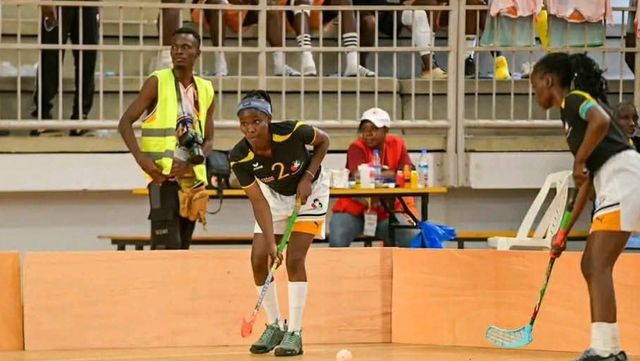
For the unfamiliar, floorball is a type of indoor hockey played with a lightweight plastic ball perforated with holes, and sticks designed for speed and skill
In a country that lives and breathes football, athletics, and rugby, a new sport is quietly carving its niche — floorball. Often mistaken for a cousin of hockey, floorball is fast-paced, energetic, and most importantly, community-driven.
Follow our WhatsApp channel for more news
In Kenya, the growth of this indoor hockey variant is being championed by a committed group of visionaries under the Kenya Floorball Federation, with Paul Maina Mwangi at the helm.
As president of the federation, Maina’s mission transcends sports — it is about youth empowerment, community development, and creating a future free of vices for the younger generation.
“My role is to shape the vision,” he says. “It’s about bringing together different giftings for the sake of the growth of the game in Kenya.”
What is Floorball?
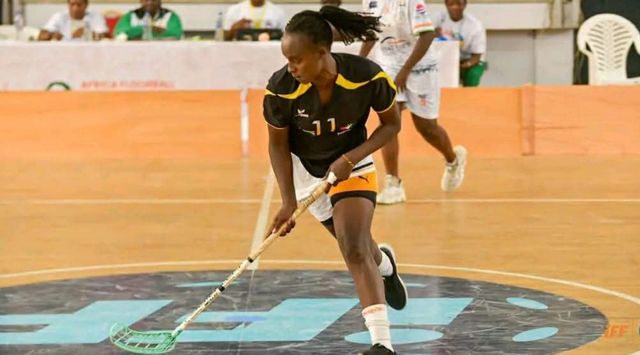
For the unfamiliar, floorball is a type of indoor hockey played with a lightweight plastic ball perforated with holes, and sticks designed for speed and skill.
The game is fast, highly entertaining, and allows for quick substitutions, which keeps the tempo high and the action continuous.
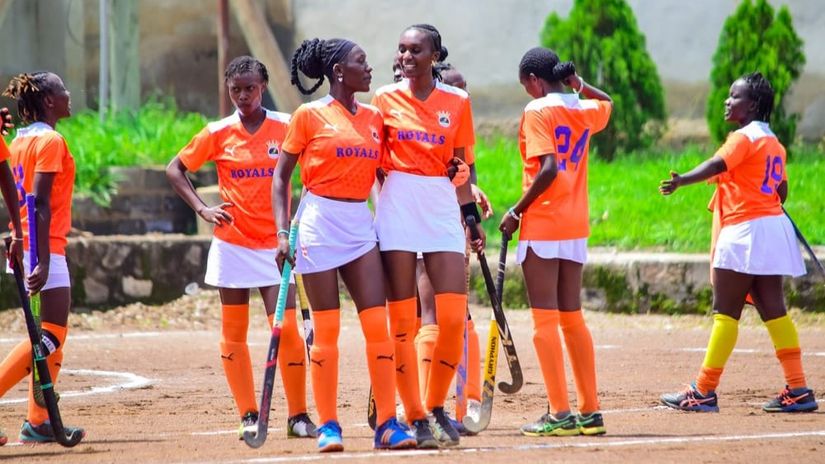
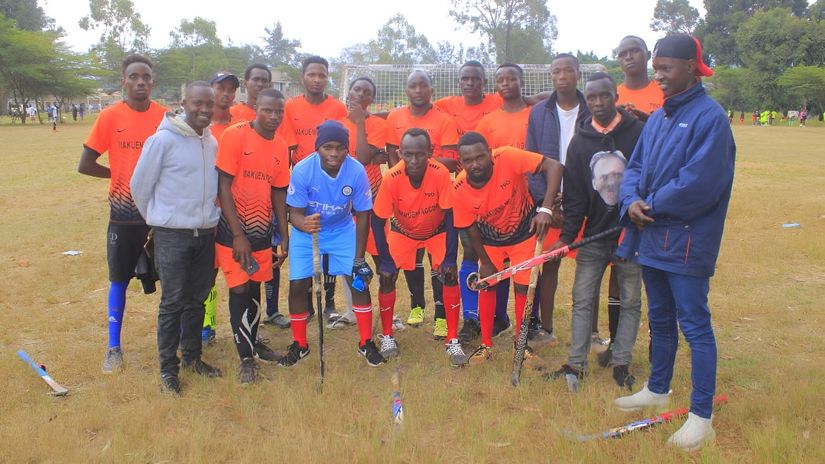
“Though designed for indoor arenas, we play it outside in Kenya due to the scarcity and cost of suitable indoor spaces,” Paul explains.
The sport found its way into Kenya in 2015, thanks to a partnership between the Glory Outreach Assembly (GOA Sports Arm) and a Swiss organization called Floorball for All.
The game was kickstarted by a training session that brought together 49 local coaches and 11 from Switzerland. This moment marked the beginning of a transformative journey.
Maina, who holds a degree in sports science, recognized the potential of floorball to fill a unique gap in Kenya’s sports ecosystem.
With a passion for innovation and development, he and his team established the Kenya Floorball Federation, as mandated by the Sports Act, to govern and promote the sport nationwide.
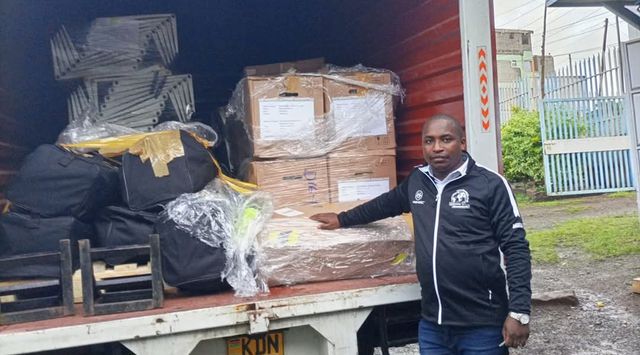
Unlike many grassroots-driven initiatives, the federation adopted a top-to-bottom approach. With equipment not readily available in the local market, they focused on empowering coaches first.
These coaches were equipped and then dispatched to introduce the sport across communities and schools.
“The journey has not been easy,” admits Maina. “New sports face huge challenges in Kenya — from a lack of equipment to inaccessible facilities, to political and leadership wrangles.”
He recalls moments of internal division and power struggles that threatened the unity of the young federation. But through resilience and teamwork, the challenges were overcome.

Limited Resources, Unlimited Drive
The hurdles are many - indoor arenas like Kasarani and Nyayo are costly, forcing teams to use alternative spaces like parking lots for training and league matches. The lack of government funding is another persistent issue.
“We have never received financial support from the government,” notes Maina. “But we’re grateful for the peaceful environment that allows us to organize events without fear.”
Despite these constraints, the federation has managed to foster an active floorball culture in regions like Nairobi, Kiambu, Nyeri, Meru, Embu, and parts of Western Kenya.
They are also making headway in institutionalizing the sport in schools, colleges, and TVETs by training in-house coaches and pushing for official recognition in the school games calendar.
To ensure sustainability, the federation runs training programs for coaches, referees, and players. These are held both locally and in partnership with international bodies like the International Floorball Federation and Swiss counterparts.
One of the federation's long-term dreams is to build a dedicated floorball facility — a massive leap that would reduce the costs of hiring venues and give the sport a permanent home.

The dream, however, hinges on resources, goodwill, and potential partnerships with stakeholders like the Ministry of Sports, NOC-K, and county governments.
But with limited prioritization from authorities, Maina admits it is a tough sell.

“Most institutions want to associate with big sports like football. We’re often told we’re not a priority sport,” he says, visibly disappointed. “But that won’t stop us.”
Competitions and National Team Success
Floorball in Kenya is not just about training — it is a competitive space. The federation organizes grassroots tournaments, a national league, and an annual tournament that brings together all teams in the country. These competitions are the main scouting avenues for the national teams.
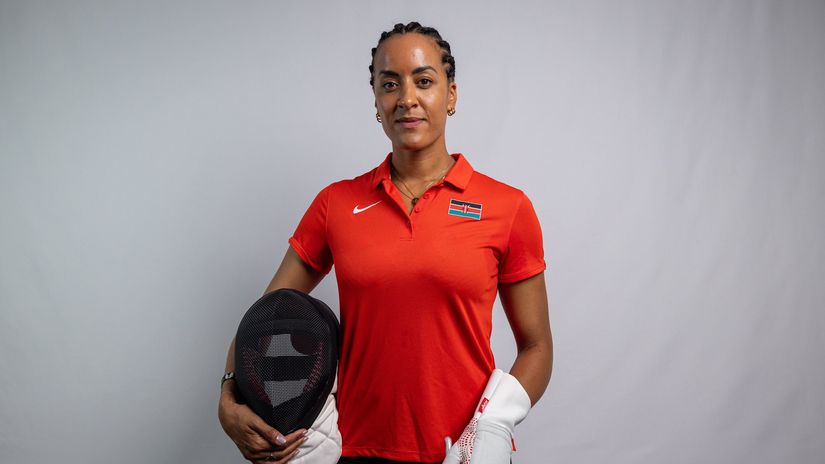
Kenya’s women’s national team is currently ranked number one in Africa, and the men’s team holds the second position. Kenya has also played host to major continental events — including the second and fourth Africa Floorball Cup editions in 2019 and 2023, respectively.
“Kenya has been pivotal in the sport’s growth across Africa,” Maina proudly notes. “We’ve participated in every continental tournament so far.”

Unfortunately, international exposure has often been limited by finances. A missed opportunity this May, where Kenya failed to travel to Switzerland for a 3v3 World Floorball event due to late visa processing and insufficient funds, is a stark reminder of these challenges.
Maina is calling on the corporate world to step up: “Support from corporates and well-wishers can take us far. Our mission is not just sport, but transformation.”
A Tool for Social Change
Beyond wins and rankings, floorball is a weapon against drug abuse and youth idleness.
“Young people have a lot of energy and time. If not directed into positive avenues like sports, it could destroy an entire generation. That’s why we are very intentional about kids’ leagues and youth programs.”
The federation is also ramping up its efforts to increase visibility through social media and media partnerships.
“We are where we are because of the media,” says Maina, acknowledging the vital role that storytelling and coverage play in popularizing the sport.
Maina envisions a future where every young Kenyan can access and play floorball — from the cities to the remotest villages. He hopes to see the sport integrated into high school and primary school programs over the next five to 10 years.
Upcoming events like the 2025 Africa Floorball Cup in Ivory Coast and next year’s planned participation in the World Games underscore the federation’s ambition. But these milestones will only be possible with consistent support.
As Maina prepares to pass the baton in the coming federation elections, he leaves behind a solid foundation and a vision for floorball that is inclusive, impactful, and deeply rooted in Kenyan values.
“Floorball has taken me to places I never imagined,” he reflects. “And I believe it can do the same for thousands of young Kenyans.”
The game may still be in its infancy in Kenya, but with leaders like Maina, a committed federation, and a growing network of players, coaches, and fans, floorball is undoubtedly on the rise.